
Hillary Clinton goes to sub-Saharan Africa: a counterpoise to China’s sway?
The Secretary of State was in Senegal Wednesday, kicking off a seven-nation trip to sub-Saharan Africa. Hillary Clinton will highlight Africa’s economic and political progress – and try to define what Obama means by ‘partnership, not patronage.’
By Howard LaFranchi | Christian Science Monitor
Secretary of State Hillary Rodham Clinton may confront a sentiment that the United States is arriving a little late to Africa’s dance as she undertakes a 10-day, six-nation sub-Saharan trip to spread President Obama’s “partnership, not patronage” Africa policy.
The Obama administration came into office pledging a new relationship with Africa focused more on private investment, democracy-building, and security cooperation than on handouts. But America’s own economic troubles and its focus on Asia have meant the new policy has been more one of words than action, some Africa experts say.
One result is that China has been left to solidify its place as the preeminent major-power investor in Africa at a time of rapid growth across much of the continent.
Think you know Africa? Take our geography quiz.
“The [Obama] administration is coming a bit late – even with this new strategy there’s a sense that … it’s really not sufficient,” says Mwangi Kimenyi, director of the Africa Growth Initiative at the Brookings Institution in Washington. “There’s a disappointment in terms of what could have been done.”
Secretary Clinton kicked off her trip in Senegal Wednesday, where she touted how the West African country overcame political tensions earlier this year to elect a new president. But too many Africans, she said, still live under “autocratic rulers who care more about preserving their grip on power than promoting the welfare of their citizens.”
In a speech in the capital of Dakar, Clinton previewed her Africa trip – her fourth as chief US diplomat – saying she would focus on the “partnership, not patronage” policy that President Obama unveiled in his 2009 speech in Ghana. “I will be talking about what that means – about a model of sustainable partnership that adds value, rather than extracts it,” she said.
That comment seemed to refer to China, which has increasingly turned to Africa in recent years to supply the raw materials for its economic boom.
“The days of having outsiders come and extract the wealth of Africa for themselves, leaving nothing or very little behind, should be over in the 21st century,” Clinton said.
One goal of Clinton’s trip will be to highlight Africa’s recent progress – from continuing economic growth in the midst of a global downturn and a rise in consumer spending, to signs of a growing political maturity in some countries – and thus to pique the interest of American investors in a continent they have often shunned.
Clinton will wind up her trip Aug. 10 in South Africa, a middle-income country whose global influence is rising as one of the BRICS (Brazil, India, China, South Africa) emerging economies. Before that, she will make stops in Uganda, Kenya, Malawi, and South Sudan, which became the continent’s newest country in 2011 after breaking off from Sudan.
South Africa is a good place for Clinton to bring a new US policy toward Africa, some experts say, because in some key ways it represents where a growing Africa is heading: increased prosperity for some as investment grows, but under broad and crushing inequality.
“South Africa is a middle-income country with perhaps the highest inequality in the world,” says Haroon Bhorat, director of development policy research at the University of Cape Town. Clinton, he says, is likely to emphasize that South Africa must address its considerable economic challenges, including unemployment that tops 25 percent, if it wants to fulfill its promise as “Africa’s next big thing.”
Clinton will also be looking to elaborate what the White House unveiled last month as its “new strategy for sub-Saharan Africa,” which speaks of four “pillars” of US relations with the continent: democracy-building, trade and investment, development, and peace and security. The latter point reflects growing concern across the administration that Al Qaeda and affiliated extremist groups are gaining new footholds in pockets of instability.
But some experts say what is billed as a “new strategy” risks not sounding all that different to Africans – especially if it remains policy with little concrete application.
“What the US is talking about sounds good, but it comes across to both the leaders and the people in Africa as theoretical and abstract, and that will hamper the US role in Africa until it becomes something more concrete,” says Terza Lima-Neves, an associate professor of African politics at Johnson C. Smith University in Charlotte, N.C.
Despite a “yearning” across much of Africa for the things the US talks about, from strengthened democracies to greater respect for human rights, Professor Lima-Neves says, there is also a part of Africans that appreciates the “more concrete” version of assistance that China has made a part of its investment strategy.
Noting that China has focused on building infrastructure while “leaving things like governance or human rights alone,” she says there’s no denying the appeal of that approach “to the family that now has a paved street in front of their house or a school for their kids to go to.”
That doesn’t mean the Chinese approach is better, Lima-Neves says, but rather that the US should figure out a way to make its policy and its “partnership” with Africa more tangible.
Correction: Christian Science Monitor’s six day tour was edited to correct it as a seven day tour.
_________________________________________________
Update
August 3, 2012
U.S. plot to sow discord between China, Africa is doomed to fail
Xinhua
BEIJING- U.S. Secretary of State Hillary Clinton Tuesday launched an 11-day tour of Africa, lobbying African leaders to cooperate with so-called responsible nations rather than countries focusing on exploitation.
Although the U.S. top diplomat did not mention any country by name, her remarks were widely interpreted to be targeting China, which replaced her country as Africa’s biggest trading partner three years ago.
Whether Clinton was ignorant of the facts on the ground or chose to disregard them, her implication that China has been extracting Africa’s wealth for itself is utterly wide of the truth.
The relationship between China and Africa is rooted in friendship and equality, and their bilateral cooperation is based on mutual benefit and dedicated to the prosperity of their 2.3 billion people.
China-Africa trade ballooned to 166.3 billion U.S. dollars in 2011, as African exports to China jumped to more than 93 billion dollars.
Cumulative Chinese direct investment in the continent has exceeded 15 billion dollars, with investment projects covering 50 countries.
In addition to transfusing blood to the developing continent, China also attaches great importance to enhancing Africa’s own blood-making capacity, such as by helping improve Africa’s infrastructure and expand its base of expertise.
China’s booming economic relations with Africa have stemmed both from their time-honored friendship and complementary needs of development. Its genuine respect of and support for African countries’ development paths are lauded and welcomed across the continent.
The friendly and mutually beneficial interaction between China and Africa gives the lie to Clinton’s insinuation.
Ironically, it was the Western colonial powers that were exactly the so-called outsiders, which, in Clinton’s words, came and extracted the wealth of Africa for themselves, leaving nothing or very little behind.
And China is a true partner that is committed to forging with Africa what the U.S. top diplomat termed as “a model of sustainable partnership that adds value, rather than extracts it.”
Clinton’s hidden agenda in Africa is no big secret. As commentators across the world have pointed out, the trip is aimed at least partly at discrediting China’s engagement with the continent and curbing China’s influence there.
Her remarks betrayed an attempt to drive a wedge between China and Africa for the U.S. selfish gain.
Such cheap shots are uncalled-for and unnecessary. The United States has every right to foster its relationship with Africa, and Africa needs more truly helping hands. But it is unwise for Washington to resort to such a rude means.
Meanwhile, the vicious insinuation was doomed to failure. It ignored the friendly and fruitful cooperation between China and Africa, and would be rejected by sober minds across the continent and the world at large.
China and Africa will continue their concerted and undistracted efforts to further boost their strategic partnership. Their bilateral cooperation has withstood various tests and will continue so in the future.
_________________________________________________
Video: Secretary of State Hillary Rodham Clinton’s Africa trip
____________________________________________
Video: A review of the U.S. current relationship with Africa during the Obama administration
______________________________________________
Video: Clinton promotes democracy in Africa
______________________________________________
Video: Hillary Clinton meets Senegal President Macky Sall
_________________________________________________
Video: Hillary Clinton in Uganda
_________________________________________________
Video: Hillary Clinton arrives in Kenya
__________________________________________________
Video: Hillary Clinton shows off her dancing skills in South Africa
____________________________________________
Video: Clinton talks on “deepening economic partnership” with South Africa
_____________________________________________
Nigeria’s Minister of State for Foreign Affairs I Viola Onwuliri, left, greets Secretary of State Hillary Rodham Clinton as she arrives at Abuja International Airport in Abuja, Nigeria, Thursday, Aug. 9, 2012.

(AP Photo/Jacquelyn Martin, Pool)
__________________________________________
Clinton in secret talks with Nigeria’s president, assures of U.S. support
Xinhua
ABUJA– America’s Secretary of State Hillary Clinton on Thursday held secret talks with Nigeria’s President Goodluck Jonathan and thereafter assured him of her country’s support for the west African nation.
Clinton, who was accompanied by officials of the U.S. Embassy in Nigeria and some diplomats, arrived the Presidential Villa at exactly 3:54 p.m. local time, had various closed-door meetings with Jonathan and the country’s security chiefs for over two hours.
“You know how committed United States and the Obama administration is to our partnership with your country. We consider it absolutely vital to our Bi-national commission which, as you have mentioned, has helped us to expand and deepen our cooperation on full range of issues. We are working on economic matters, the improvement of productivity in agriculture, education and health, security, diversification of your economy and so much more. We intend to remain very supportive on your reform efforts,” she said after holding talks with the president.
She said America wants to work with the Nigerian government side by side, especially at this crucial time of taking tough decisions that can aid development.
Clinton said the ECOWAS country was making good anti-corruption reforms and that the United States would continue to support every commitment of the Nigerian government in that area.
Her visit to Nigeria, Africa’s most populous nation and a major supplier of U.S. oil imports, comes with the country’s president under growing pressure to stop the violence in the northern and central regions of the country. The latest was the massacre Monday night of members of a Deeper Life Church based in north central Kogi State.
Before her visit to Nigeria, expectations were high in the country that she would renew the United States’ offers of assistance and help to the Nigerians, especially in tackling insecurity which seemed to have become a hard nut to crack by the government.
On his own part, Jonathan commended the U.S. government for their support over the years, while specially thanking the secretary of state for reassuring the west African nation of her country’s support.
“Within this period of being Secretary of State, she has raised the relationship between Nigeria and America to a very high level that we have never reached for quite some time by personally chairing the Bi-national commission and we have discussed various things including security, economy and so on and so forth. She has been very supportive,” he said.
The U.S. top official had been on an African tour since July 31, having already visited Senegal, Uganda, South Sudan, Kenya, Malawi and South Africa. She is also expected to briefly visit Republique du Benin and Ghana, where she will grace the final burial of the late president John Atta Mills.
____________________________________

US Secretary of State Hillary Clinton (L) meets with Nigerian President Goodluck Jonathan at the State House in Abuja, Nigeria. Clinton urged Jonathan on Thursday to push ahead with reforms as it faces a deadly Islamist insurgency which has shaken Africa’s largest oil producer. (AFP Photo/Wole Emmanuel)
______________________________________________
Forum on China-Africa Cooperation held at the Great Hall of the People in Beijing on July 19, 2012.
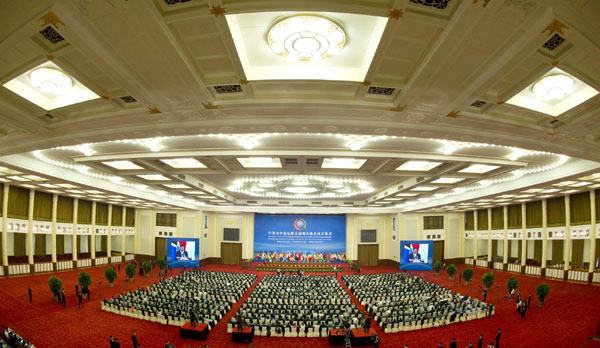
The opening ceremony of the Fifth Ministerial Conference of the Forum on China-Africa Cooperation is held in Beijing, July 19, 2012. [Photo/Xinhua]
Video: Forum on China-Africa Cooperation -July 19, 2012
_______________________________________________
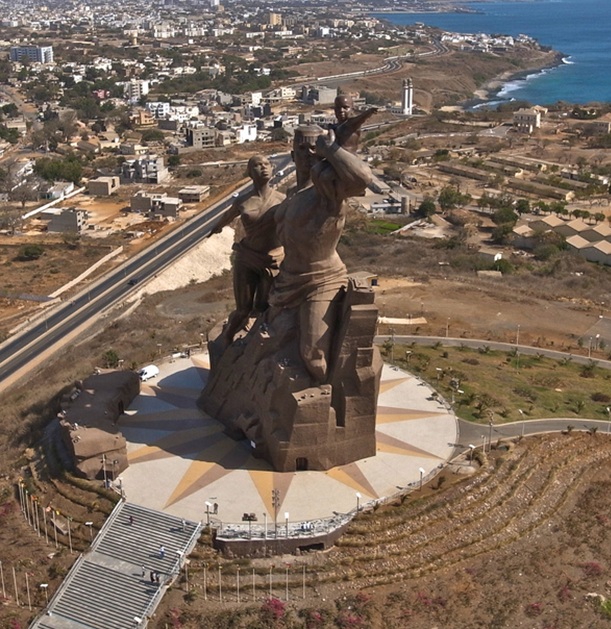
Senegal
Population: 12,969,606 (July 2011 est.)
Dakar

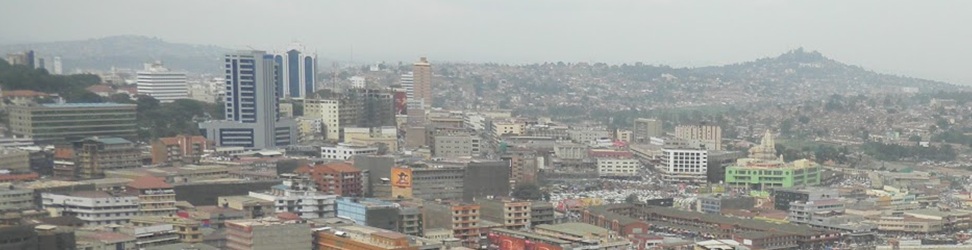
Uganda
Population: 35,873,253 (July 2012 est.)
Kampala


South Sudan
Population: 10,625,176 (July 2012 est.)
Juba is the largest city in South Sudan with a population estimated at over 372,400
Kenya
Population: 43,013,341 (July 2012 est.)
Nairobi


Ghana
Population: 25,241,998 (July 2012 est.)
Accra
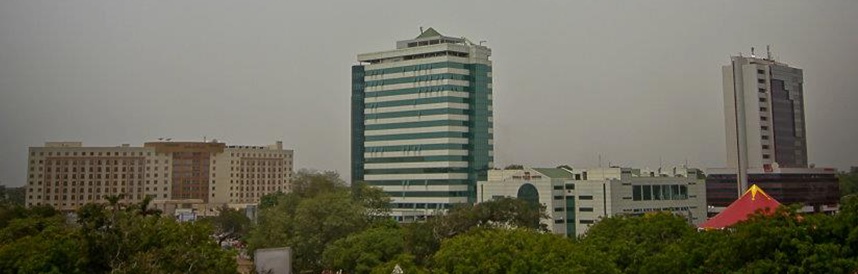

Malawi
Population: 16,323,044 (July 2012 est.)
Lilongwe is the largest city with a population over 781,500
South Africa
Population: 48,810,427 (July 2012 est.)
Johannesburg


 Dilemma X
August 3, 2012
Africa, Government/Politics, International